
My experience with the Global Interfaith Leadership Project
By Ronit Hizgiaev ’28
We spend much of our time in college surrounded by people who are different from us. Whether in the classroom, dining halls, residence halls, or campus organizations, we might not pay much mind to it, but we share different upbringings, beliefs, political views, and understandings of the world. How often, though, do we try to understand the people sitting across from us?
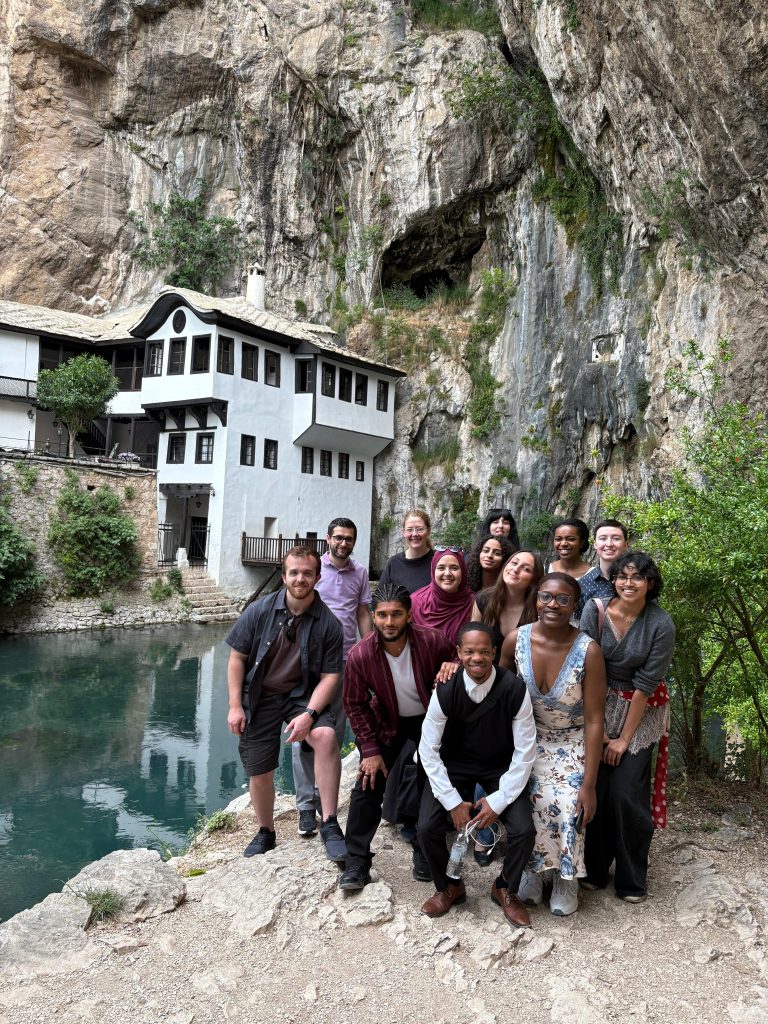
It is easy to celebrate diversity in principle. It is harder to embrace it in practice, especially when the differences between us touch things we hold most dearly: our faith, identities, and our histories.
When I joined the inaugural cohort of Syracuse University’s Global Interfaith Leadership Project (GILP) at Hendricks Chapel, I did not expect how profoundly the experience would challenge my understanding of responsibility, leadership, community, and, above all, humanity.
As part of our program, we traveled to Germany and Bosnia & Herzegovina. One evening in Sarajevo, after a day spent visiting sites connected to the Bosnian War, including the Srebrenica-Potočari Memorial and Cemetery, our cohort gathered for dinner. What began as a meal eventually developed into a lengthy conversation about the international community’s failure to act during the Bosnian genocide and the United Nations’ repeated shortcomings in responding to humanitarian crises around the world.
I remember listening to each person’s contribution to the conversation. We came from different religious traditions, cultural backgrounds, and lived experiences. Every student, with their respective studies, shared something thoughtful, compelling, and deeply meaningful. An evident shared frustration was present with what Bosnia and its people had endured, particularly after walking through the atrocity sites and seeing the places where real suffering took place.
We questioned institutions, challenged international policy, and grappled with difficult questions. But what stayed with me was the way we had our dialogue. Every person had room to speak. Every perspective was valued. We did not need to share the same background or worldview to recognize the importance of what someone else had to say.
But what stayed with me was the way we had our dialogue. Every person had room to speak. Every perspective was valued. We did not need to share the same background or worldview to recognize the importance of what someone else had to say.
As an international relations student at the Maxwell School of Citizenship and Public Affairs, I have spent years studying international institutions, conflict, diplomacy, and the failures of the international system in a classroom. But this conversation was different. We were no longer analyzing political theory. We were processing what we had witnessed together, bringing our own perspectives to the table, and recognizing the responsibility we shared as emerging leaders.
I left that dinner feeling more empowered than I had ever felt after a conversation. I remember wanting to get out into the world immediately and change everything. I wanted to challenge the institutions that had failed, advocate for communities that had been overlooked, and become the kind of leader who takes on the responsibility to do something about injustice.
There is something deeply paradoxical about finding hope in a place that has witnessed so much human suffering.
There is something deeply paradoxical about finding hope in a place that has witnessed so much human suffering.
I think about that dinner often because it embodied something I had struggled to articulate before joining this cohort. Governments can fail. Institutions can fall short. Politics can divide us. History can remind us of the things we are capable of doing to one another. But there is also something fundamental about people choosing to listen, understand, and continue the conversation despite differences.
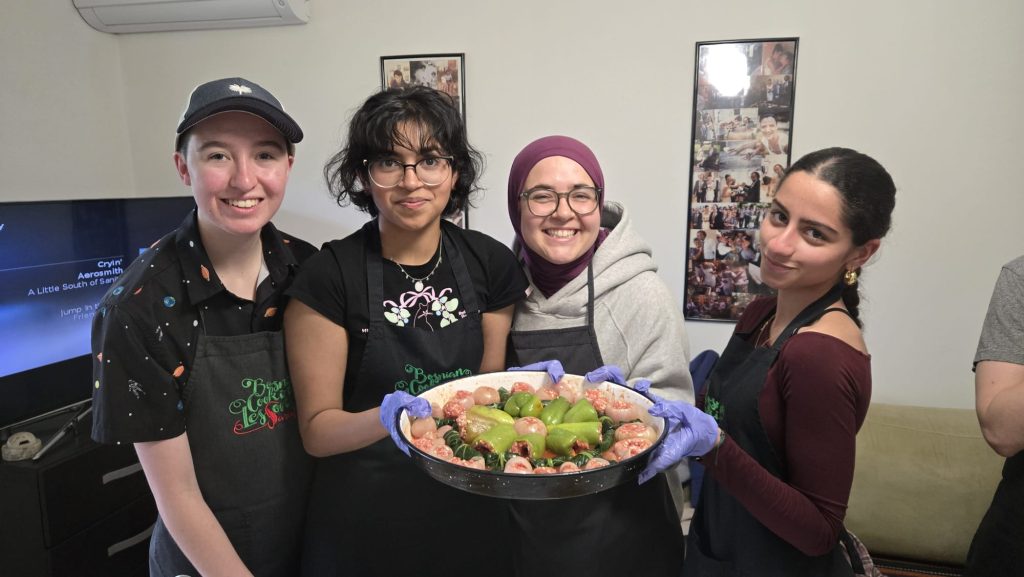
And not every meaningful moment required a conversation about international politics or historical atrocities. Some of my favorite memories were much quieter. They were the evenings spent talking in hotel rooms, where my Muslim friend would stop to pray while the rest of us continued going about our evening. There was no awkwardness, no discomfort, and no need for an explanation. It was purely part of sharing a space with someone whose daily practices differed from my own.
I got up early with my Catholic friend because I was curious as to what Mass looked like, especially in a new country. I was not participating in these experiences to compare religions or find reasons why one tradition was more compelling than another. I wanted to understand what made them meaningful to the people around me, and what implored them to continue showing up to their faith.
Curiosity became one of the greatest things I took away from the experience. You do not need to compromise your own faith to learn about someone else’s.
Curiosity became one of the greatest things I took away from the experience. You do not need to compromise your own faith to learn about someone else’s. You can be firmly rooted in your identity while remaining genuinely interested in someone else’s. You can ask questions without shame, participate without pretending, and appreciate something without necessarily sharing the beliefs behind it.
This distinction is particularly meaningful on college campuses. There remains talk of diversity, inclusion, and belonging, but we often forget that coexistence requires more than sharing physical space. It requires a willingness to engage with people whose experiences challenge our assumptions. It means resisting the temptation to reduce someone to their political affiliation or religious identity. A person and a reason are behind every perspective.
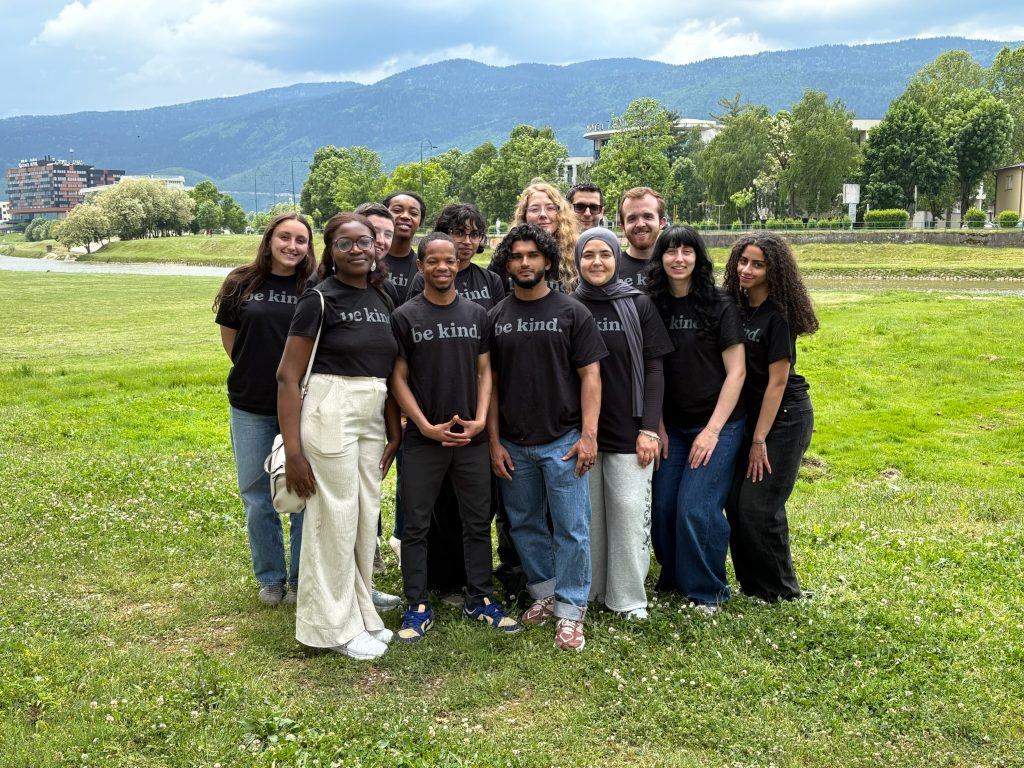
As students, we are constantly told that we are the leaders of tomorrow. We attend leadership conferences, join organizations, build resumes, and prepare for careers in which we hope to make a difference. But GILP teaches you that leadership begins in much smaller places: at a dinner table, in a dorm room, inside a house of worship, or in a conversation with someone you might never have otherwise met.
Being an interfaith leader means being willing to ask better questions. This work is about creating relationships strong enough to withstand differences and become brighter individuals.
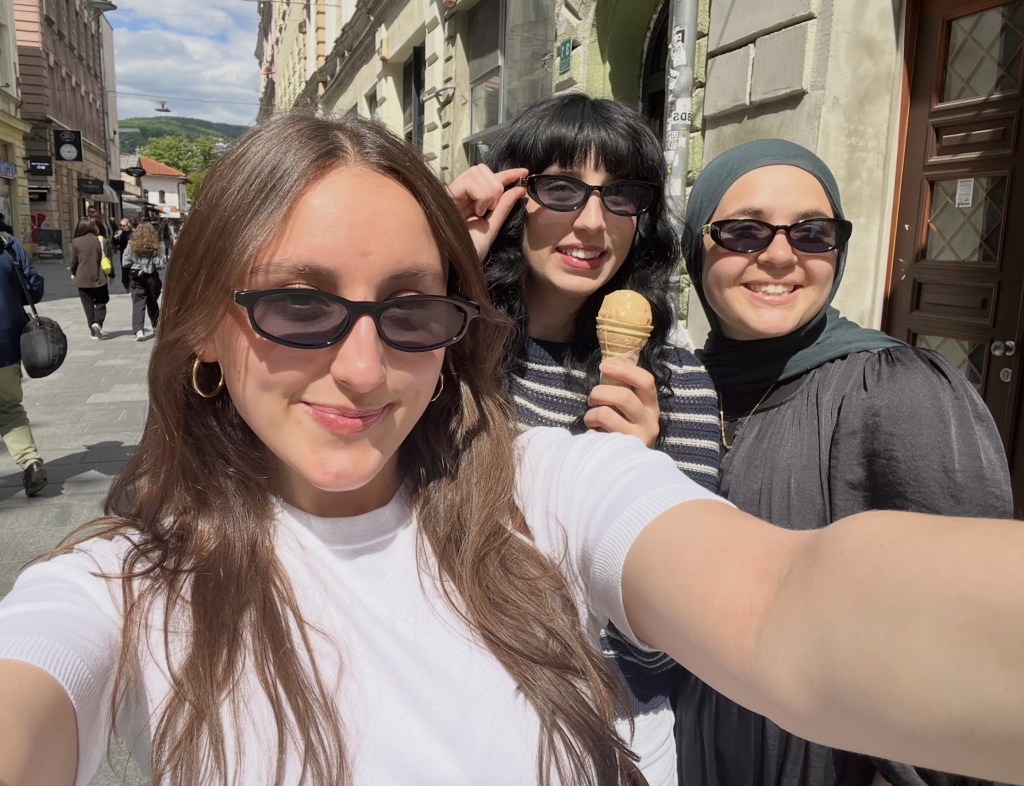
My experience as a GILP scholar reminded me that institutions, while they appear forthright, cannot alone build the kind of world we hope to live in. That work also depends on the relationships we form, the conversations we are willing to have, and the dignity we extend to people who see the world differently.
GILP is entering its second year, and I hope more Syracuse students get to experience what I did. You do not need to identify with a particular religion, belong to a faith-based organization, or consider yourself an expert in interfaith relations. You need to arrive with an openness to learn about people and perspectives beyond your own.
I left with friendships, memories, and a renewed sense of responsibility to the world around me.
We traveled to Bosnia to learn about humanity’s failures, and I brought home with me a reminder of its possibilities. And perhaps that is what we need most right now: not another reason to divide ourselves, but more opportunities to recognize what we share, and remember that our humanity is something worth protecting.
For more information about GILP and to apply for the 2027 cohort, visit Hendricks Chapel’s website.
About the Author
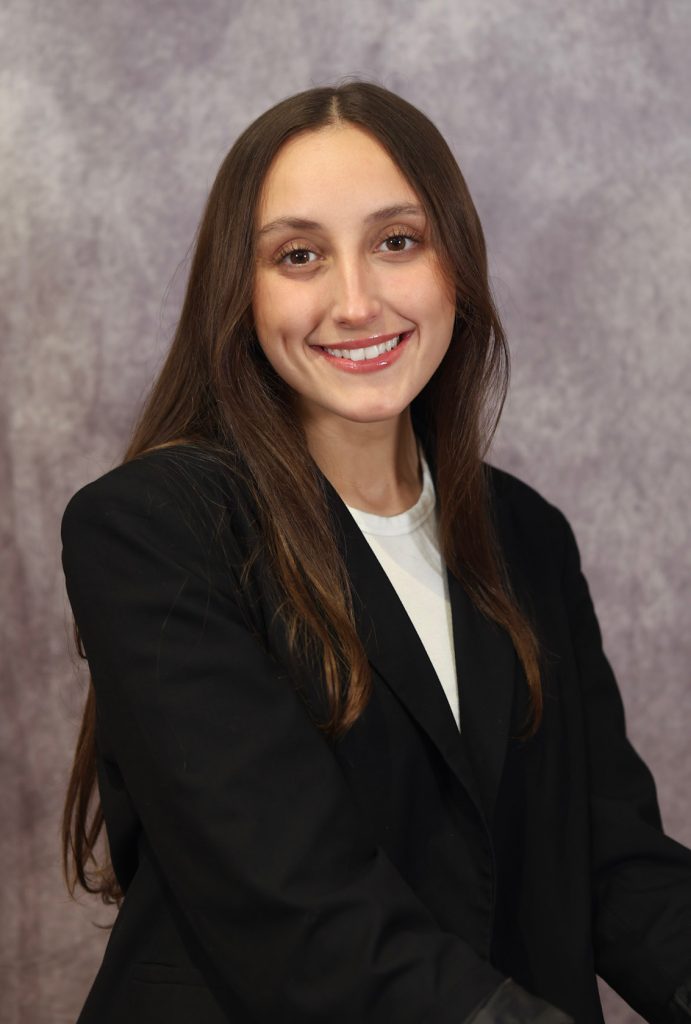
Ronit Hizgiaev ’28 attends the Maxwell School of Citizenship and Public Affairs at Syracuse University, where she studies International Relations and Middle Eastern Studies. She is interested in a career in foreign diplomacy or public interest law and holds a core value of ensuring everyone’s voice is heard and accounted for. A member of Syracuse Hillel, Ronit is part of the 2026 Global Interfaith Leadership Project cohort.
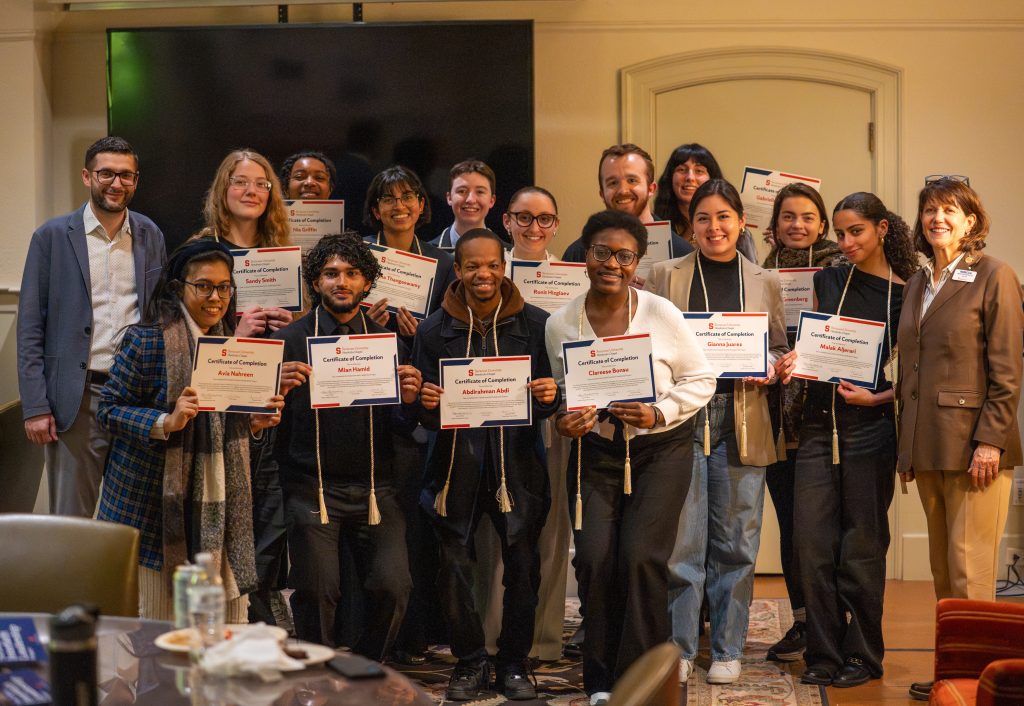
Hendricks Chapel, the spiritual heart of Syracuse University, is the student-centered global home for religious, spiritual, moral, and ethical life. Established in 1930 as a home for all faiths and place for all people, the chapel hosts 15 chaplains and more than 20 religious and spiritual groups. Hendricks Chapel employs student workers, supports musical ensembles, offers support through the Student Opportunity Fund, Coach Mac Food Pantry, and Student Veteran Support Fund, and partners throughout the campus community to advance academic excellence at a university welcoming to all. As a central contributor to holistic life and learning at Syracuse University, Hendricks Chapel helps to prepare engaged citizens, scholars, and leaders for participation in a changing global society.